Continuity after 2020
Preserving a work when its player is gone
A digital work is more than a filename. It may depend on a runtime, fonts, linked media, scripts, server responses and the timing behavior of a particular player. When any layer disappears, the bytes may remain while the experience changes.
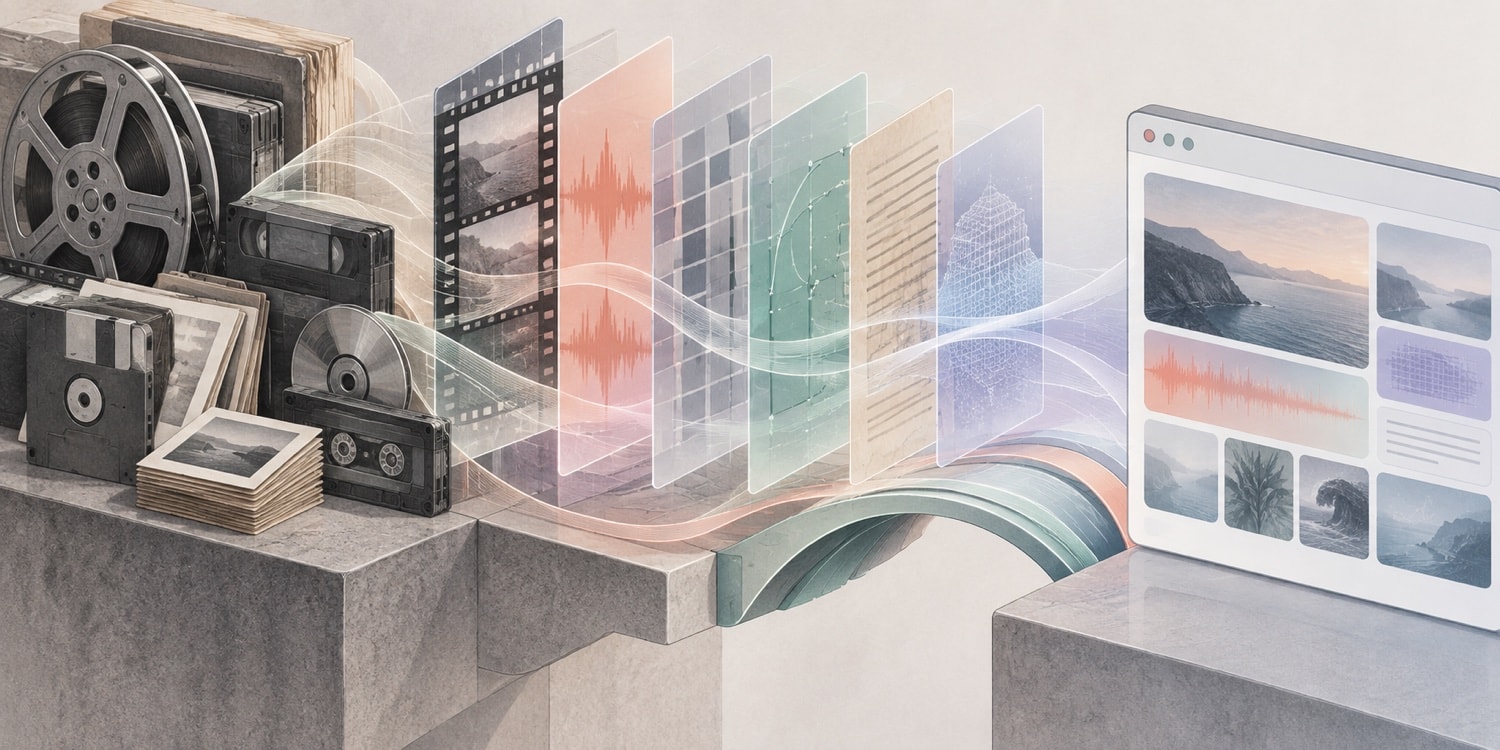
The break
Flash Player reached end of life
Adobe stopped supporting Flash Player after 31 December 2020 and blocked content from running in the Player beginning 12 January 2021, according to its official end-of-life guidance. Browser vendors removed support as part of the same transition. An ordinary visit to an old embed page could therefore produce an empty box or a disabled-plugin message even when the media file still existed.
This was a platform event, not a judgment about any individual work. It affected games, interfaces, education, advertising, experiments and animation across the web.
Object
The SWF file, its version, checksums and any external dependencies.
Behavior
Timing, input, sound, scripting and the player assumptions needed for meaningful operation.
Context
Title, creator, date, containing page, rights status and evidence about public circulation.
Access
A lawful route for study that does not confuse technical possibility with permission to republish.
Emulation
A compatibility layer, not a rights shortcut
Ruffle is an open-source Flash Player emulator designed for modern operating systems and browsers. Emulation can restore behavior for compatible files without reinstalling the original plugin. Compatibility varies with Flash version, scripting and the particular features a work uses.
Technical success does not supply a license. A rights holder’s work remains protected whether it runs in its original player, an emulator or a converted video. This reference therefore discusses emulation without loading the documented animations.
Format choices
Preserve the dynamic object and a viewable rendition when lawful
The Library of Congress guidance for moving-image content distinguishes dynamically generated animation from bitmapped video and lists both FLA and SWF among acceptable formats for encoded animations and interactives. That distinction matters: a video can show timing and sound, while the original object may retain interactivity, vectors and internal structure.
No single derivative replaces every property. Good stewardship records what was retained, what changed and which dependencies remain unresolved. It also keeps descriptive certainty proportional to direct inspection.
Rights
No files, stills or players
See the documented works index · about this reference.
Description as stewardship
A precise record can remain useful without playback
Basic descriptive fields let researchers connect an obsolete object to the web around it. A stable title, creator attribution, file format, dimensions, approximate date and contemporary citation can support later rights research, technical analysis and bibliography. Recording uncertainty is part of that work.
Context should be modular. A new legal interpretation or technical emulator may change the surrounding essay without changing the underlying catalog facts. Keeping those layers separate makes correction easier and prevents a later explanation from masquerading as information embedded in the work itself.
Preservation is therefore not only a storage task. It is a chain of decisions about identity, behavior, rights, evidence and access. Any missing link can change what future readers believe survives.
Restraint is part of continuity: an honest incomplete record is more durable than an attractive but unsupported substitute.